




Reading Time: 7 mins
Service members are trained to function under conditions that would break most people. They operate in environments of sustained threat, moral complexity, and physical extremity—and they do so with a level of discipline and commitment that is genuinely extraordinary. What military training does not prepare them for is what comes after. The psychological weight of combat exposure, the abrupt transition from high-stakes mission to civilian routine, and a culture that has historically treated emotional difficulty as a disqualifying weakness have combined to create a mental health crisis within the military community that demands serious, evidence-based intervention. Military mental health treatment has advanced significantly over the past two decades, and the treatments available today are more effective, more targeted, and more accessible than anything that existed for previous generations of veterans. This article outlines what that treatment looks like and why it works.
PTSD and Combat Stress in Active Service Members
Combat stress is not a sign of psychological weakness—it is the predictable neurological response to sustained exposure to threat, loss, and moral injury. The human nervous system was not designed to remain in a state of hypervigilance for months or years at a time, and when it is forced to do so, it adapts in ways that persist long after the immediate danger has passed. PTSD treatment begins with understanding that the symptoms it targets—hyperarousal, avoidance, intrusive memories, and emotional numbing—are not character flaws. They are the brain’s learned survival adaptations operating in a context where survival is no longer the immediate concern.
How Combat Exposure Creates Lasting Psychological Wounds
The psychological impact of combat is not determined solely by the severity of events witnessed. Research consistently shows that factors including perceived threat to life, the loss of fellow service members, moral injury from orders followed or orders refused, and the absence of adequate post-deployment support all shape the depth and duration of combat stress responses. The National Institute of Mental Health (NIMH) identifies PTSD as a condition that physically alters brain structure and function, particularly in areas governing fear response, memory consolidation, and emotional regulation—changes that require targeted clinical intervention to address effectively.
The Neurobiological Impact of Military Trauma
Veteran mental health cannot be meaningfully addressed without acknowledging its neurobiological dimension. Prolonged trauma exposure elevates cortisol levels, dysregulates the HPA axis, and produces measurable changes in the amygdala, hippocampus, and prefrontal cortex—the brain regions most centrally involved in fear, memory, and rational decision-making. These are not abstract findings. They explain why veterans with PTSD treatment needs often struggle with sleep, concentration, emotional reactivity, and the ability to feel safe in environments that objectively pose no threat. Treatment that addresses only behavioral symptoms without engaging the underlying neurobiological disruption produces partial and often temporary relief.
Evidence-Based Approaches to Veteran Mental Health Recovery
The landscape of veteran mental health treatment has been transformed by two decades of rigorous clinical research conducted in collaboration with the Department of Veterans Affairs, academic medical centers, and independent researchers. The treatments now recognized as gold standard for military-related psychological injury are not experimental—they are thoroughly validated through randomized controlled trials and real-world clinical outcomes. The American Psychological Association (APA) identifies Prolonged Exposure therapy and Cognitive Processing Therapy as the two most strongly supported treatments for PTSD, with EMDR following closely as a validated alternative. What distinguishes effective military mental health treatment is the delivery of these modalities by clinicians who understand military culture, the specific nature of combat trauma, and the identity-level implications of seeking psychological help within a community that prizes self-sufficiency.
| Treatment Modality | Primary Target | Evidence Level | Avg. Treatment Duration |
| Prolonged Exposure (PE) | Avoidance, fear response | Very Strong | 8–15 sessions |
| Cognitive Processing Therapy (CPT) | Trauma-related beliefs, guilt | Very Strong | 12 sessions |
| EMDR | Intrusive memories, flashbacks | Strong | 6–12 sessions |
| Resilience Training | Preventive, stress inoculation | Moderate–Strong | Ongoing |
| Medication (SSRIs/SNRIs) | Symptom management | Moderate | Ongoing, adjunctive |
Cognitive Behavioral Therapy for Military-Related Trauma
Cognitive behavioral therapy occupies a central role in military counseling because it targets the specific thought patterns and behavioral responses that sustain post-traumatic symptoms long after the original events have passed. For service members, these often include guilt about survival, distorted beliefs about personal responsibility for outcomes that were beyond their control, and avoidance behaviors that provide short-term relief at the cost of long-term recovery.
Trauma-Focused CBT in Clinical Practice
Trauma therapy rooted in CBT principles works by systematically identifying the distorted cognitions that trauma has installed and replacing them with more accurate, adaptive assessments. In military contexts, this frequently involves direct engagement with memories and beliefs that service members have worked hard to avoid—a process that is genuinely difficult but clinically necessary. Cognitive Processing Therapy, one of the most rigorously validated forms of trauma-focused CBT, guides patients through structured written accounts of traumatic events and targeted examination of the beliefs those events have generated about safety, trust, control, and self-worth.
Measuring Progress Through Structured Interventions
One of the practical advantages of evidence-based trauma therapy protocols is that they produce measurable outcomes at defined intervals. Standardized instruments like the PTSD Checklist for DSM-5 (PCL-5) and the Patient Health Questionnaire (PHQ-9) allow clinicians to track symptom trajectory session by session, making adjustments when progress stalls and providing patients with objective evidence of improvement. For service members accustomed to measurable performance metrics, this structured approach to clinical progress tends to resonate more effectively than open-ended therapeutic models without defined benchmarks.
Addressing Depression and Anxiety Disorders in Soldiers
Depression in soldiers and anxiety disorders frequently co-occur with PTSD and require integrated clinical attention. The National Alliance on Mental Illness (NAMI) reports that approximately 30 percent of veterans who seek PTSD treatment also meet criteria for major depressive disorder, and the interaction between the two conditions significantly complicates recovery if both are not addressed simultaneously. Depression reduces motivation, impairs cognitive function, and disrupts sleep — all of which undermine engagement with the trauma-focused therapies that produce the deepest long-term results. Anxiety disorders in military populations often present with a distinctive quality: hypervigilance that was adaptive in a combat environment becomes debilitating in civilian settings where threat assessment is constantly misfiring. Effective military mental health treatment for these co-occurring conditions uses integrated protocols that address PTSD, depression, and anxiety within a coherent treatment framework rather than sequencing them as separate concerns.
Resilience Training Programs That Build Psychological Strength
Resilience training represents a preventive and augmentative dimension of military mental health treatment — one that is gaining significant traction as the field moves toward proactive rather than exclusively reactive care. Rather than waiting for clinical thresholds to be crossed, resilience programs build the psychological skills and social support structures that reduce the impact of trauma exposure before and during deployment.
Developing Coping Mechanisms for High-Stress Environments
The most effective resilience training programs incorporate the following evidence-supported components:
- Stress inoculation training: Controlled exposure to manageable stressors builds tolerance and reduces the physiological impact of high-pressure situations encountered in service.
- Cognitive reappraisal skills: Teaching service members to identify and reframe unhelpful thought patterns before they become entrenched reduces the cognitive vulnerabilities that trauma exploits.
- Social connection building: Research consistently identifies unit cohesion and peer support as among the strongest protective factors against PTSD treatment need following deployment.
- Mindfulness-based stress reduction: Structured mindfulness practice improves attention regulation and reduces the automatic reactivity that combat exposure tends to heighten.
- Sleep hygiene and physiological recovery: Prioritizing sleep quality and physical restoration builds the neurobiological foundation that makes all other coping mechanisms more effective.
Specialized Trauma Therapy Techniques for Service Members
Eye Movement Desensitization and Reprocessing in Military Contexts
EMDR has emerged as one of the most compelling and rapidly effective trauma therapy approaches available for military mental health treatment. Developed by Dr. Francine Shapiro, EMDR uses bilateral stimulation — typically guided eye movements — while patients briefly hold traumatic memories in mind, a process that appears to facilitate the adaptive reprocessing of memories that have remained frozen in their traumatically encoded state. The Substance Abuse and Mental Health Services Administration (SAMHSA) recognizes EMDR as an evidence-based treatment for PTSD, and VA-affiliated research has demonstrated particularly strong outcomes in veterans with combat-related trauma. For service members who are resistant to extended verbal processing of traumatic events — as many are — EMDR provides a clinically validated alternative pathway that requires less explicit narration and produces measurable symptom reduction in a relatively compressed timeframe.
Military Counseling Resources and Treatment Options at Treat Mental Health Texas
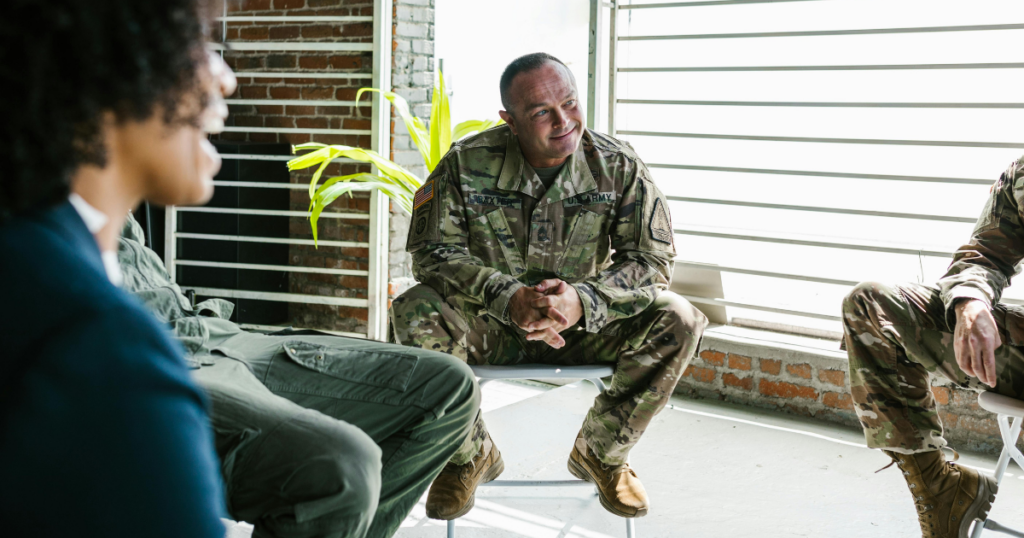
Treat Mental Health Texas provides military mental health treatment through a clinical framework that takes the unique experiences of service members seriously. The team understands that military counseling is not simply standard therapy delivered to veterans — it requires cultural competence, familiarity with the specific nature of combat trauma, and an approach to the therapeutic relationship that respects the identity and values of those who have served. Whether you are managing active PTSD treatment needs, depression in soldiers that has gone unaddressed for years, or anxiety disorders that have made civilian life feel unmanageable, Treat Mental Health Texas offers the evidence-based care and individualized attention that meaningful recovery requires.
You served. You deserve care that meets that standard. Reach out to Treat Mental Health Texas to schedule your evaluation and begin working with a team that understands what you have been through and what genuine recovery looks like.

FAQs
1. Can EMDR therapy reduce nightmares and flashbacks faster than traditional counseling approaches?
EMDR consistently demonstrates rapid symptom reduction in intrusive symptoms—nightmares and flashbacks specifically—within fewer sessions than prolonged exposure or CPT. Clinical trials have shown meaningful improvement in PTSD treatment outcomes within six to twelve sessions, making it one of the most time-efficient validated trauma therapy options for service members.
2. What differentiates trauma-focused CBT from standard therapy for military service members?
Standard therapy explores general emotional patterns across a broad range of life experiences. Trauma therapy rooted in CBT targets the specific distorted beliefs, avoidance behaviors, and fear responses that combat trauma has instilled—using structured protocols with defined session content and measurable outcome tracking that standard approaches do not provide.
3. How do resilience training programs prevent anxiety disorders in high-stress combat roles?
Resilience training builds the cognitive, physiological, and social resources that buffer against trauma impact during and after deployment. By developing stress tolerance, reappraisal skills, and unit cohesion before exposure occurs, these programs reduce the likelihood that anxiety disorders will develop and lower the severity of combat stress responses when they do.
4. Which depression treatments work best for veterans with service-related PTSD symptoms?
Integrated treatment addressing both depression in soldiers and PTSD simultaneously produces the strongest outcomes. Trauma-focused CBT and EMDR reduce both PTSD and depressive symptoms concurrently, while structured behavioral activation and pharmacological support with SSRIs or SNRIs can address the motivational and physiological dimensions of depression that complicate trauma therapy engagement.
5. How long does neurobiological recovery take after intensive military trauma therapy?
Neurobiological recovery from military trauma is gradual and does not follow a uniform timeline. Research shows measurable changes in amygdala reactivity and prefrontal cortex function within months of sustained trauma therapy engagement, but full neurobiological stabilization may unfold over one to three years of consistent clinical work and lifestyle-level support, including sleep, exercise, and social connection.